

[A Piece of History] Cucumber Straightener
How to Get a Perfect Vegetable — the Victorian Way

Here’s another curious piece of material culture: the cucumber straightener.
It was long believed to have been invented by none other than George Stephenson (1781–1848) — the very same Stephenson who brought us the steam locomotive. In his later years, he took a serious interest in gardening and applied the same precision and ingenuity to vegetable beds as he once did to railway lines. Among his supposed lesser-known legacies was a device designed to solve a horticultural nuisance: the curling of long cucumbers into pig-tailed spirals.
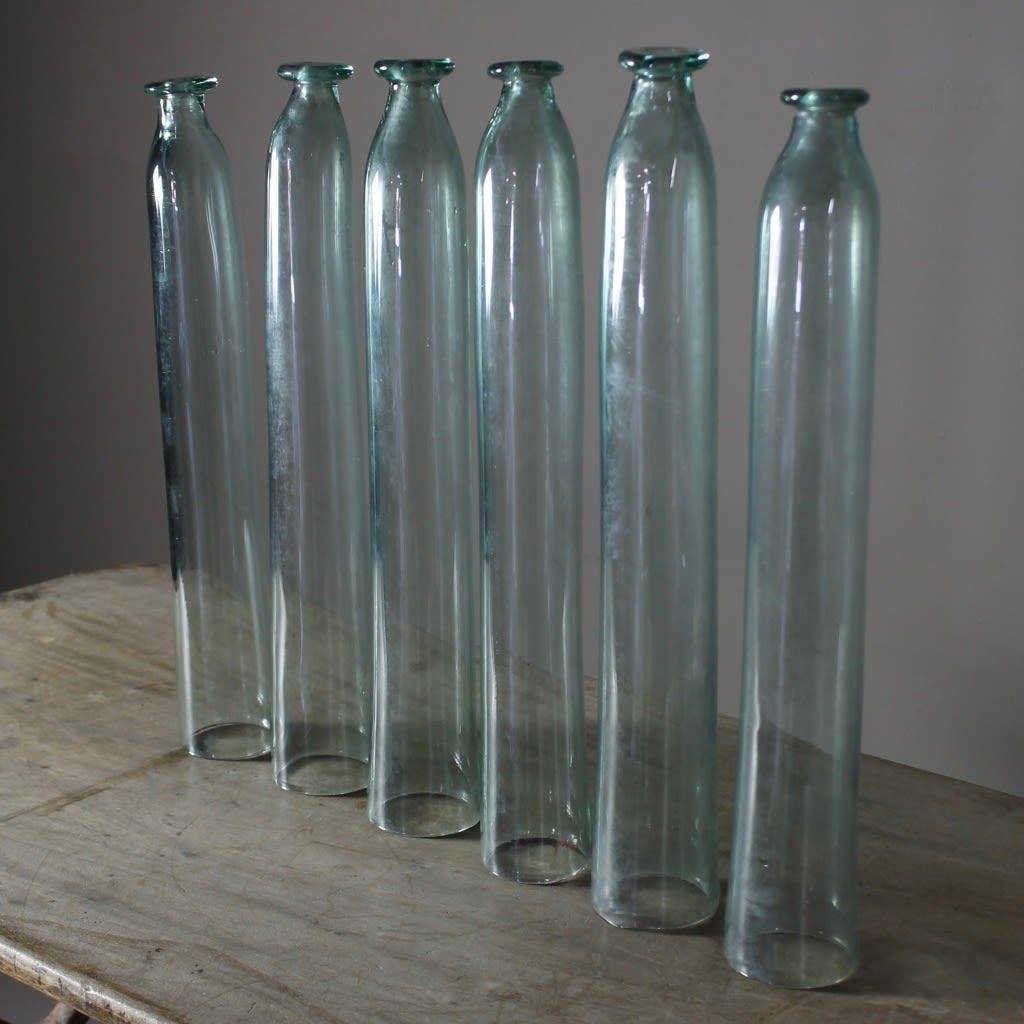
To combat this, Stephenson reportedly commissioned specially blown glass cylinders at his Newcastle steam engine works. These elongated funnels were placed over young cucumbers to guide their growth — gently but firmly — along a straight path. A gift to gardeners, yes, but also a testament to the Victorian desire to bring order and control to all things natural.
But here’s the twist.
According to recent research by The Museum of Gardening, Stephenson almost certainly didn’t invent the cucumber straightener — even if he used it extensively and had models produced for his own gardens. Glass tubes designed to shape cucumbers were already in use before 1845, the year Stephenson first turned seriously to horticulture. Publications from the early 19th century mention such tools, and by the 1840s, cucumber tubes were advertised for sale in London. So while Stephenson may have delighted in the results — and even claimed to have ‘bothered the cucumbers noo!’ — the invention itself wasn't his.
He is, however, also said to have designed an elaborate slicing machine for cucumbers. One look at it, and you start to understand why the father of railways had little patience for unruly, bent specimens.
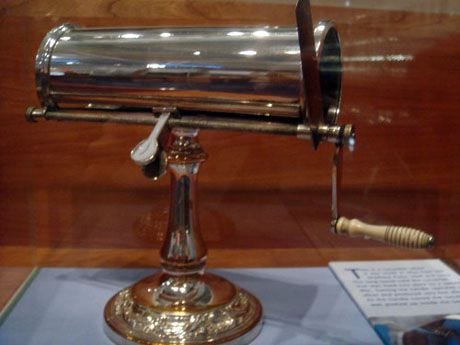
Technological advances in the 19th century extended far beyond industry and transportation. In food production and presentation, too, Victorians sought not only efficiency but elegance — even perfection. The straight cucumber, while nutritionally identical to a crooked one, might be considered as a symbol of refinement and control.
Interestingly, the obsession hasn’t entirely faded. Today’s supermarkets still prefer their cucumbers straight, but more for the convenience of storage and transportation. A curved cucumber? That’s for home gardens and rebellious growers.
But let’s be honest: even the wildest cucumbers taste just fine. Some might say, even better than the tamed ones. Still, there’s something undeniably charming about the idea of a railway pioneer turning his gaze from iron tracks to garden beds — and bringing a little Victorian discipline to the vegetable patch.